Deep Learning
MNIST with Tensorflow
•2 min read
#deep learning
import tensorflow as tf
from tensorflow.keras import layers, models
from tensorflow.keras.datasets import mnist
from tensorflow.keras.utils import to_categorical
# Load the MNIST dataset
(train_images, train_labels), (test_images, test_labels) = mnist.load_data()

# Preprocess
train_images = train_images.reshape((60000, 28, 28, 1)).astype('float32') / 255
test_images = test_images.reshape((10000, 28, 28, 1)).astype('float32') / 255

# One-hot encode the labels
train_labels = to_categorical(train_labels)
test_labels = to_categorical(test_labels)
model = models.Sequential([
    layers.Conv2D(32, (3, 3), activation='relu', input_shape=(28, 28, 1)),
    layers.MaxPooling2D((2, 2)),
    layers.Flatten(),
    layers.Dense(10, activation='softmax')
])
/usr/local/lib/python3.11/dist-packages/keras/src/layers/convolutional/base_conv.py:107: UserWarning: Do not pass an `input_shape`/`input_dim` argument to a layer. When using Sequential models, prefer using an `Input(shape)` object as the first layer in the model instead.

  super().__init__(activity_regularizer=activity_regularizer, **kwargs)
model.compile(optimizer='adam',
              loss='categorical_crossentropy',
              metrics=['accuracy'])
model.fit(train_images, train_labels, epochs=1, batch_size=64)
[1m938/938[0m [32m━━━━━━━━━━━━━━━━━━━━[0m[37m[0m [1m4s[0m 3ms/step - accuracy: 0.8654 - loss: 0.5052
<keras.src.callbacks.history.History at 0x7ed6d758b210>
test_loss, test_acc = model.evaluate(test_images, test_labels)
print(f'Test Accuracy: {test_acc * 100:.2f}%')
[1m313/313[0m [32m━━━━━━━━━━━━━━━━━━━━[0m[37m[0m [1m1s[0m 4ms/step - accuracy: 0.9595 - loss: 0.1402
Test Accuracy: 96.64%
model.save('mnist_cnn.keras')

model = models.load_model('mnist_cnn.keras')
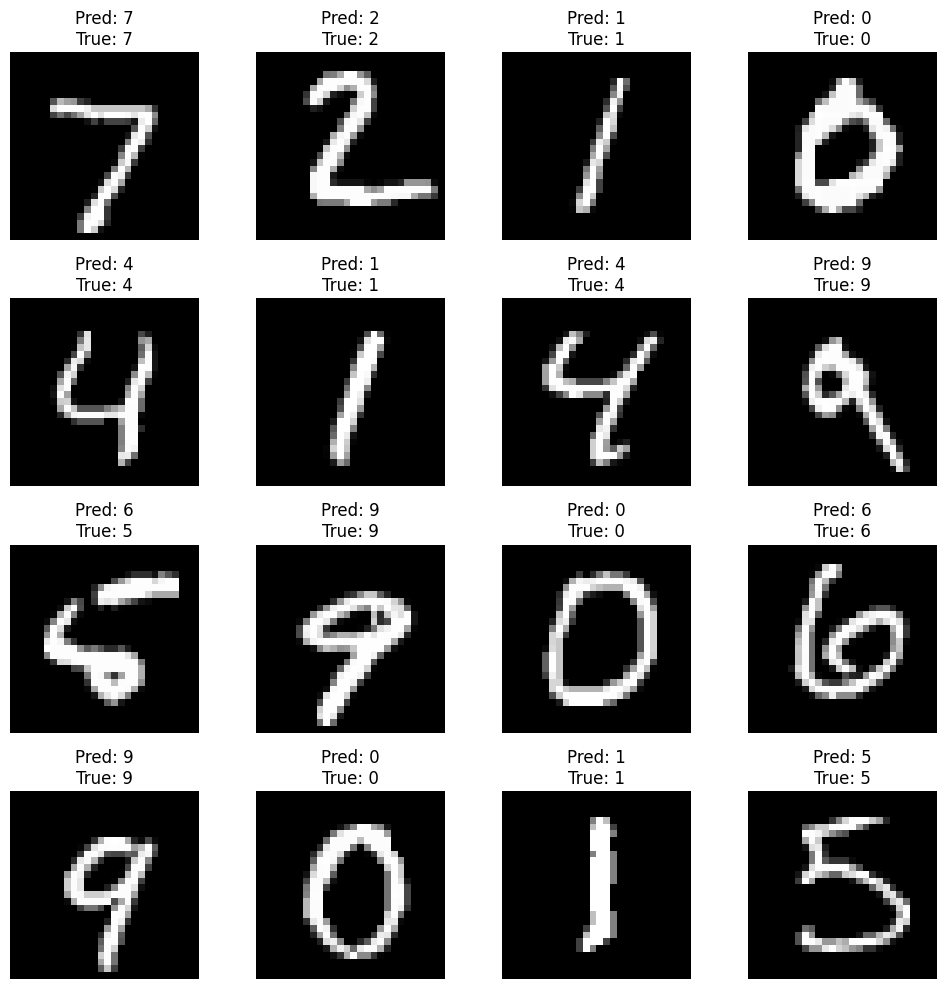
Visualize
import matplotlib.pyplot as plt
import numpy as np

# Make predictions
predictions = model.predict(test_images)
predicted_labels = np.argmax(predictions, axis=1)

# Convert one-hot encoded labels back to integers
true_labels = np.argmax(test_labels, axis=1)

# Plot the images with their predicted and actual labels
fig, axes = plt.subplots(4, 4, figsize=(10, 10))
for idx, ax in enumerate(axes.ravel()):
    ax.imshow(np.squeeze(test_images[idx]), cmap='gray')
    ax.set_title(f'Pred: {predicted_labels[idx]}\nTrue: {true_labels[idx]}')
    ax.axis('off')

plt.tight_layout()
plt.show()
[1m313/313[0m [32m━━━━━━━━━━━━━━━━━━━━[0m[37m[0m [1m1s[0m 2ms/step